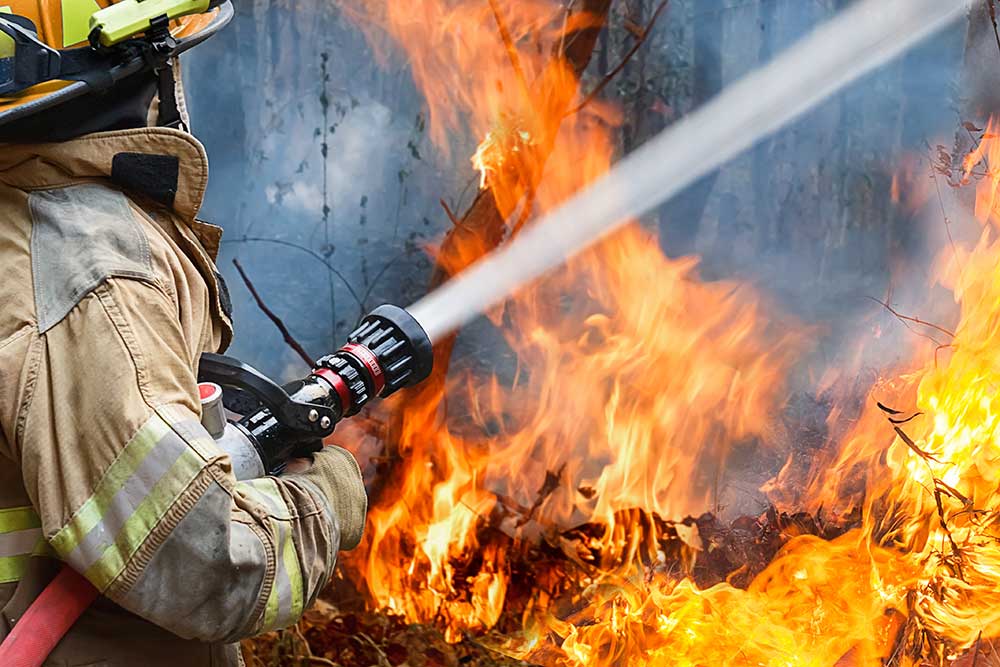
Kefalonia remains under close watch as Greece continues to deal with a severe summer wildfire season, with the island still recovering from a major blaze that swept through parts of its eastern and southern areas earlier this month.
The most significant recent Kefalonia fire began in the Pastra area during the night of August 1–2, quickly developing into a major firefighting operation. Flames threatened a number of settlements, prompting authorities to issue repeated 112 emergency messages ordering residents and visitors to leave several areas and move toward safer locations.
Firefighters faced difficult conditions as strong winds pushed flames across dry vegetation. ERT reported that active fire fronts developed around Mousata and Ratzakli, with ground crews working through the night while aircraft joined the operation after daylight. The priority was to prevent the fire from reaching populated areas and create defensive lines around communities at risk.
The scale of the response reflected the seriousness of the situation. Firefighters, specialist forest-fire teams, vehicles and aerial resources were deployed, while local authorities supported the operation with water tankers and other equipment.
The wind remained one of the biggest obstacles. Even after conditions improved, firefighters continued dealing with flare-ups and rekindling, particularly around the areas affected by the main blaze. ERT reported that crews remained on the ground as aerial resources helped target remaining hotspots.
By August 3, the main fire was reported to be under control, although the damage did not end when the flames were contained. Electrical infrastructure and water networks serving some fire-affected communities had been damaged, leaving repair teams working to restore services.
The Kefalonia fires occurred during an especially difficult period for Greece. Across the country, firefighters have been dealing with multiple wildfires, while high temperatures, dry vegetation and strong winds have created conditions capable of turning relatively small fires into rapidly moving emergencies. Recent fires on Salamina, near Athens, have resulted in deaths and mass evacuations, keeping wildfire risk at the centre of Greece’s emergency planning.
For Kefalonia residents and visitors, the recent experience has reinforced the need for caution. Authorities continue to urge people to avoid activities that could start fires and to follow emergency notifications immediately if an evacuation order is issued.
At present, there is no reliable confirmation of a newly erupted major Kefalonia wildfire on August 17 matching the wording of the headline. Current reporting instead concerns the aftermath and ongoing wildfire risks following the major Pastra-area blaze earlier this month.
That distinction matters for tourists planning trips to the island. Images and videos from the August fire continue to circulate online and can sometimes be presented without their original dates, creating the impression that an older incident is happening again.
Anyone currently on Kefalonia should therefore rely on official Greek emergency alerts and local authorities for real-time information rather than social-media posts alone.
The island’s firefighters have already demonstrated how quickly conditions can change. Even when a major fire is declared controlled, crews may continue monitoring the affected terrain because dry vegetation and strong winds can produce new flare-ups.
For now, Kefalonia remains part of a wider Greek wildfire emergency that has required substantial firefighting resources across the country.